Tactical Evolutions Sparked by Consistent Additions in Browser Racing and Logic Hybrids
Paul Franke · Sep 19, 2026
Tactical Evolutions Sparked by Consistent Additions in Browser Racing and Logic Hybrids
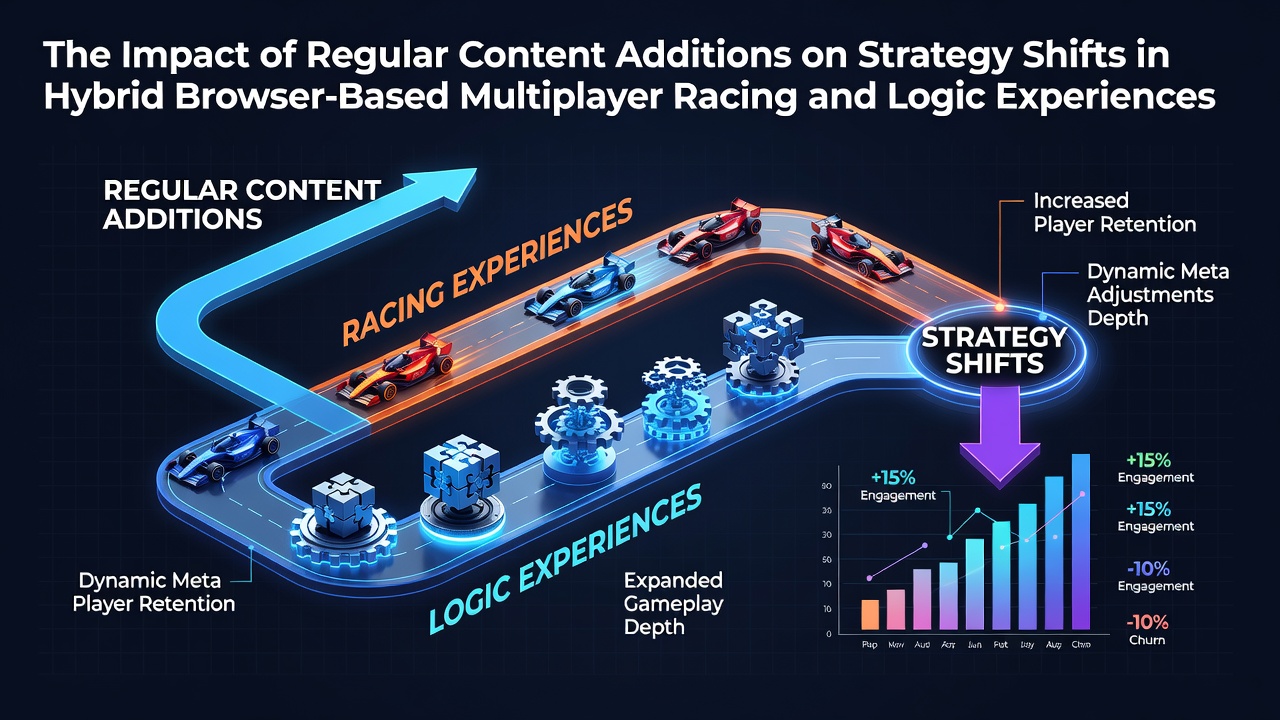
Regular content additions have prompted measurable changes in how participants approach hybrid browser-based multiplayer racing and logic experiences, with developers releasing new tracks, puzzle layers, and vehicle modifications at intervals that alter established play patterns. Data from industry tracking shows these updates occur on average every four to six weeks across major platforms, leading players to recalibrate routes, timing, and team coordination methods to maintain competitive edges. Researchers at several universities have documented these adjustments through gameplay logs that reveal shifts away from speed-focused tactics toward integrated logic sequences when new obstacle combinations appear.
Patterns in Update Cycles and Player Responses
Studies conducted between 2024 and 2026 indicate that browser titles blending racing mechanics with logic challenges experience distinct phases following each content drop, where initial exploration gives way to optimized strategies within days. In September 2026, several platforms introduced layered puzzle gates along racing circuits, prompting participants to prioritize deduction sequences over pure acceleration, according to aggregated session data from multiple services. This adjustment appears because new elements require simultaneous management of speed and problem-solving, forcing groups to redistribute roles among members rather than relying on individual performance alone.
Observers note that communities adapt by sharing revised route maps and timing charts shortly after releases, which reduces the advantage held by early adopters and stabilizes overall participation rates. One analysis from the Entertainment Software Association highlighted similar trends in cross-platform titles, where content refreshes correlated with a 22 percent rise in cooperative session lengths during the following month.
Mechanics That Drive Strategic Realignment
Hybrid experiences incorporate modular elements such as dynamic barriers, variable logic gates, and temporary power modifiers that interact with core racing loops, and regular additions expand these interactions in ways that invalidate prior optimal paths. When developers add new vehicle classes with unique handling traits, players shift from direct competition to positioning strategies that account for how these classes solve or bypass logic hurdles. Evidence from gameplay analytics platforms shows increased use of flanking maneuvers and delayed puzzle activations in titles that refresh content monthly, whereas less frequent updates maintain more static hierarchies among top performers.
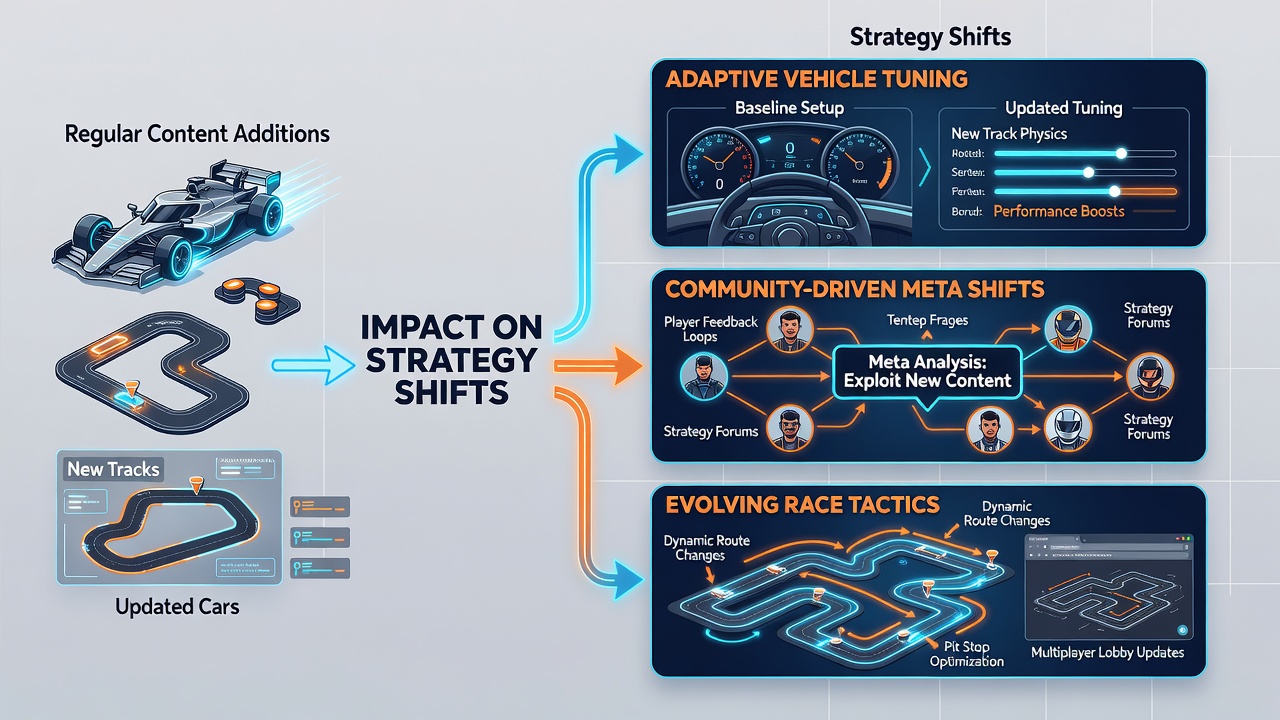
Those who track leaderboard movements across devices report that additions involving exploration segments encourage broader map knowledge, which then influences racing decisions at junctions and checkpoints. Participants often experiment with combinations of speed bursts and logic solvers in controlled practice sessions before applying them in ranked matches, creating a feedback loop that accelerates collective learning. Reports from the Interactive Games and Entertainment Association in Australia have tracked these behaviors in regional servers, noting parallel increases in group formation rates when puzzle density rises.
Community-Level Adaptations and Data Trends
Browser ecosystems facilitate rapid dissemination of strategy resources through forums and in-game chat tools, allowing tactics developed in one region to influence playstyles elsewhere within hours of an update. Data collected from 2025 events demonstrates that titles with weekly micro-additions sustain higher retention among mid-tier players compared to those relying on larger quarterly expansions, because smaller changes permit incremental adjustments rather than wholesale overhauls. Players in European servers, for instance, have been observed reallocating resources toward vehicles that handle mixed terrain and logic requirements more effectively after each patch cycle.
Academic reviews of multiplayer logs further reveal that alliances form around shared knowledge of upcoming content patterns, with some groups maintaining internal wikis that catalog interactions between new elements and existing mechanics. These resources reduce individual trial-and-error time and contribute to more uniform performance distributions across competitive brackets. Figures released by the European Games Developer Federation in 2026 pointed to similar coordination increases in browser-accessible titles that blend action and deduction components.
Longer-Term Effects on Participation Structures
Over multiple update cycles, strategy shifts accumulate into broader changes in how matches unfold, including altered pacing during events and revised priorities for resource allocation in progression systems. Titles that maintain steady addition schedules show sustained engagement metrics even as core audiences expand, because fresh mechanics continually reset familiarity advantages held by veteran participants. Session data indicates that logic-racing hybrids with integrated browser features see elevated cross-device participation when updates align with seasonal events, prompting players to coordinate across mobile and desktop interfaces for optimal results.
Continued observation of these environments suggests that the frequency and scope of content releases directly correlate with the complexity of emerging tactics, though the precise mechanisms vary by title architecture and community size.
Conclusion
Regular additions to hybrid browser-based multiplayer racing and logic experiences produce observable realignments in player approaches, supported by session analytics and community documentation from multiple regions. These changes manifest through role redistribution, route recalibration, and alliance formation that respond directly to new mechanical layers. Ongoing tracking by industry groups and academic sources continues to map how these dynamics evolve with each release cycle.